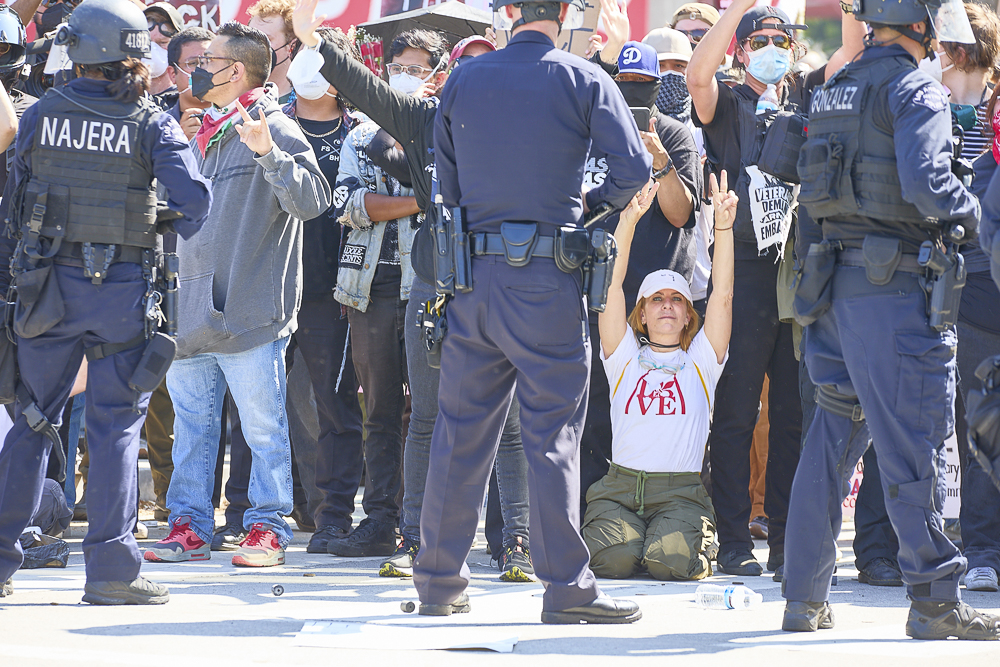
Restrictions that prevented President Donald Trump from using ICE (Immigration and Customs Enforcement) to target minorities for arrest or deportation were lifted by the Supreme Court with a 6-3 vote Sept. 8.
The court’s ruling allows the government to resume racial profiling in Los Angeles, a sanctuary city.
This decision from the Supreme Court makes it possible for ICE to continue using four criteria to profile and detain suspected undocumented immigrants.
First, the apparent race or ethnicity of anyone who is stopped can be considered. Second, whether an individual speaks Spanish “or English with an accent” could also be a factor.
Third, ICE agents can consider the actual location where an individual may be found, like a carwash, construction site or bus stop. Fourth, ICE can weigh the kind of employment the person appears to have, whether it is day labor, construction, agricultural, childcare or janitorial work.
“With the stroke of a pen, the Supreme Court has undermined the rights of millions. I want the entire nation to hear me when I say this is not just an attack on the people of L.A. This is an attack on every person in every city in this country. It’s un-American and threatens personal freedom in the United States.”
Los Angeles Mayor Karen Bass
Supreme Court Justice Sonia Sotomayor expressed her dissenting opinion decisively.
“We should not have to live in a country where the government can seize anyone who looks Latino, speaks Spanish and appears to work a low-wage job,” Sotomayor wrote. “Rather than stand idly by while our constitutional freedoms are lost, I dissent.”
Justices Ketanji Brown Jackson and Elena Kagan joined Sotomayor in dissent.
The decision made some L.A. City College students feel insecure. Maria, a child development major, shared her concerns with the Collegian. (Maria’s real name has been withheld to protect her identity.)
“I feel scared at times just to go to work. Because I can be judged just because of my appearance,” Maria wrote in a letter to the newspaper on a crumpled piece of paper. “At times, I feel weird when they think I don’t speak Spanish. But I feel that nobody should be asking that type of question: if you are undocumented?”
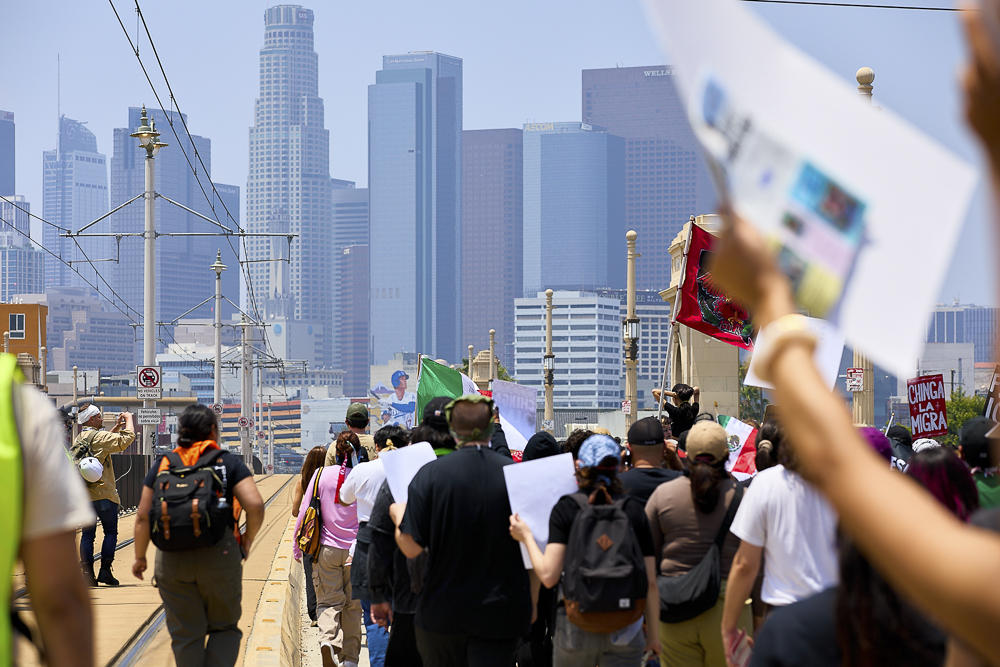
The Trump administration celebrated the decision as a “massive victory.” This means that the roving raids in Los Angeles by immigration officers can now resume. In contrast, parts of the city have taken on a feeling of eerie quiet.
“This is a win for the safety of Californians and the rule of law,” DHS Assistant Secretary Tricia McLaughlin said on X. “ICE enforcement will not be slowed down and will continue to arrest and remove the murderers, rapists, gang members and other criminal aliens.”
Supreme Court Justice Brett Kavanaugh voted to have the restrictions on ICE removed. He said it is reasonable to question people who meet common-sense criteria for possible illegal presence, like construction workers with limited English proficiency.
Many Angelenos reject Kavanaugh’s position. The ACLU filed a lawsuit on behalf of U.S. citizens who were arrested based on their ethnicity and appearance.
“This decision is a devastating setback for our plaintiffs and communities who have been subjected to stops because of the color of their skin, occupation and the language they speak,” said Mohammad Tajsar, senior staff attorney at the ACLU of Southern California.

Klen is a documentarian whose work covers social justice, women's rights, and mental health for the Los Angeles Collegian and KPFA news.